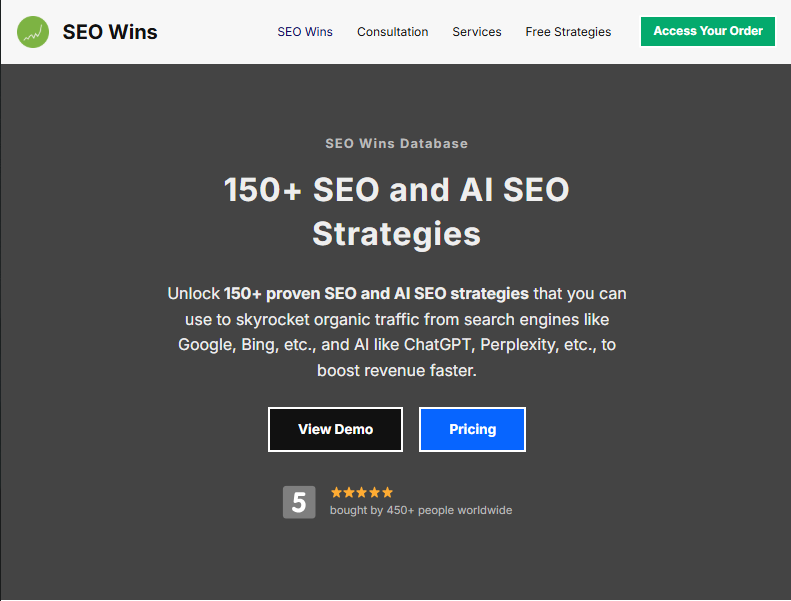


SEO Wins – 150+ SEO and AI SEO Strategies For Growth
Growing a website today demands a mix of strong SEO skills and smart AI-driven processes. Although SEO is always evolving, the foundation remains the same. You need solid content, high-quality links, fast performance, and smart optimization. However, with new AI tools, you can streamline your workflow and scale faster. This guide breaks down 150+ SEO and AI SEO strategies for growth, offering a complete system you can use to improve visibility, rank higher, and grow long-term.
1. Build a Strong SEO Foundation
A strong SEO strategy begins with a clear structure. You should always optimize your site’s architecture before creating content. This ensures search engines crawl pages easily. It also helps users move through your site without friction.
Start by mapping the structure of your website. Create a clean hierarchy and connect related pages. Add descriptive URLs, simple navigation, and internal links. Although many creators skip this step, it influences your entire SEO performance.
2. Conduct Effective Keyword Research
Keyword research remains at the core of growth. Choose keywords with the right balance of volume, intent, and competition. Use AI tools to cluster related keywords and discover long-tail opportunities. These opportunities often bring faster results. Additionally, long-tail keywords improve your targeting and help rank quicker.
Try using a mix of tools. Combine data from Google, third-party platforms, and AI suggestions. Furthermore, analyze competitor gaps. Many sites leave valuable keywords untouched. This allows you to win rankings with less effort.
3. Create High-Quality, Helpful Content
Although many try to publish large volumes, quality wins most battles. Add expert insights, data, and examples. Readers trust content backed with proof, and search engines notice that trust.
4. Use AI to Accelerate Content Workflows
However, always edit AI output. Human input ensures accuracy and originality. Use AI as support, not replacement.
5. Optimize On-Page SEO Elements
Improve your internal linking strategy. Link to high-value pages and pillar posts. This passes authority and improves crawlability. Moreover, use descriptive anchor text to help both users and search engines.
6. Strengthen Technical SEO
Also, fix indexing problems. Use sitemaps, clean up broken links, and add structured data. Although these steps may seem small, they create a smooth experience for users and search engines.
7. Build Authority With Smart Link-Building
Additionally, use outreach. Contact industry blogs, offer insights, and collaborate on content. Guest posts, interviews, and expert roundups still work when done well.
8. Leverage AI for Link Prospecting
Furthermore, AI helps personalize outreach emails. Personalized communication often improves response rates.
9. Improve User Experience for Higher Rankings
Also, improve navigation flow. Add breadcrumbs, clear menus, and intuitive category structures. These changes help users explore your site effortlessly.
10. Use Analytics to Refine Your Strategy
Use AI tools to summarize trends and highlight opportunities. AI can detect pages losing traffic or keywords rising in visibility. With this guidance, you can refine your SEO plan each month.
11. Expand With Topic Clusters and Pillar Pages
Use AI to group keywords into clusters. Then build content around each cluster. This creates a long-term system for organic growth.
12. Add Structured Data to Improve Visibility
Moreover, AI tools can generate accurate schema markup for your pages.
13. Optimize for Local SEO
14. Use AI for Predictive SEO
15. Scale Content With an Editorial System
AI tools can manage reminders, generate briefs, and help analyze results. This frees up time so you can focus on strategy.