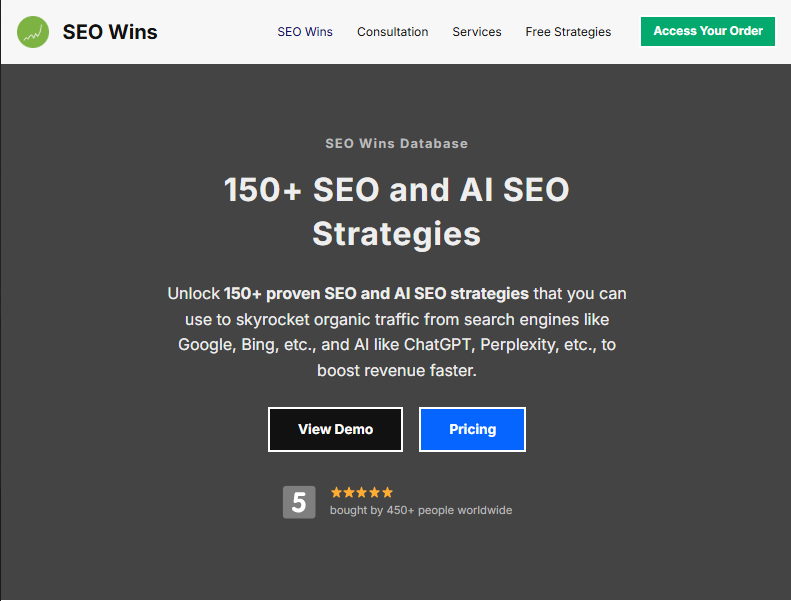


SEO Wins – 150+ SEO and AI SEO Strategies For Growth
In today’s digital world, the brands that dominate search results are the ones that understand how search engines behave and how users make decisions. Ranking on the first page is more competitive than ever, but with the right mindset, right framework, and right systems, any website can build sustainable traffic and long-term authority. That’s where the insights from SEO Wins – 150+ SEO and AI SEO Strategies For Growth become extremely powerful. Instead of depending on random tactics, the real goal is to develop a complete SEO ecosystem that makes your website a magnet for organic traffic.
This detailed guide breaks down the essential components you must master—technical foundations, content quality, user experience, data-driven optimizations, and smart AI-powered automation. Whether you’re working on a new project, scaling an authority site, or recovering from ranking drops, these strategies help you build a long-term, defensible presence on Google.
1. Understanding Search Intent Clearly
Search engines are built to match user intent with the most relevant content. To dominate search results, the first step is deeply understanding why users search for a topic.
Types of Search Intent
Informational – when users want answers, explanations, or guides.
Commercial – when they are comparing options before buying.
Transactional – when they are ready to make a purchase.
Navigational – when they are looking for a brand or specific page.
A successful SEO strategy begins by mapping keywords to the correct intent. When your content perfectly satisfies user expectations, your site earns higher dwell time, stronger engagement signals, and faster ranking improvements.
2. Building a Strong Technical SEO Foundation
A slow, unoptimized, and poorly structured website cannot rank, no matter how good the content is. Technical SEO ensures that search engines can access, crawl, and understand your pages easily.
2.1 Site Speed Optimization
Users expect websites to load in under 3 seconds. Speed optimizations include:
Compressing images
Using modern formats like WebP
Enabling browser caching
Minimizing JavaScript
Using a CDN
A fast-loading website improves user experience and reduces bounce rates significantly.
2.2 Mobile-First Optimization
Most traffic now comes from mobile devices. Your website should:
Have responsive layouts
Avoid oversized images
Use touch-friendly buttons
Maintain readable font sizes
A mobile-first approach is essential since Google primarily indexes mobile versions.
2.3 Crawlability and Indexing
Googlebot must navigate your site easily. Make sure:
Your robots.txt file is clean
There are no orphan pages
You use internal linking
Important pages are included in your XML sitemap
This helps search engines properly understand your site hierarchy.
3. Content That Becomes an Authority
High-quality content is the backbone of SEO growth. But “good content” is more than writing paragraphs—it’s about solving user problems with complete, accurate, and well-structured information.
3.1 Creating Depth and Expertise
When building any piece of content:
Cover every angle of the topic
Add real examples, case studies, and data
Use short paragraphs for readability
Include FAQ sections with real user questions
Depth signals authority and trust, which are essential ranking factors.
3.2 Structured Content Layout
A clear content structure helps both users and search engines:
Use H2 and H3 headings
Add bullet points
Highlight key insights
Use short sentences
Maintain logical flow
This improves user experience and increases the chances of featured snippets.
3.3 Updating Old Content for Growth
Old pages slowly drop in rankings if not updated. Regular updates:
Improve freshness signals
Make your content more accurate
Attract new traffic
Increase internal linking opportunities
Refreshing content is one of the easiest SEO wins.
4. AI-Assisted Keyword Research & Optimization
Artificial intelligence is transforming SEO. It speeds up tasks, reveals hidden opportunities, and helps you scale content production.
4.1 AI for Keyword Clustering
Instead of targeting random keywords, cluster them by topics:
Main topic
Supporting subtopics
Related long-tail queries
This builds topical authority and increases your chances of ranking for multiple terms.
4.2 AI for Competitor Gap Analysis
AI tools can analyze:
Competitor traffic sources
Missing keywords
Weak pages
Ranking opportunities
These insights help you create content that outranks your competitors quickly.
4.3 AI for On-Page Optimization
AI can assist with:
Writing metadata
Improving readability
Suggesting internal links
Analyzing search intent
Generating FAQs
But always maintain a human tone to avoid robotic writing patterns.
5. Backlinks Through Value, Not Spam
Backlinks remain one of the strongest ranking factors, but the strategy has shifted from quantity to quality.
5.1 Building Natural Backlinks
You can acquire high-quality links through:
In-depth research articles
Case studies
Industry statistics
Infographics
Tools and templates
These attract organic links without forcing outreach.
5.2 Relationship-Based Link Building
You grow your site faster when you build relationships with:
Bloggers
Industry leaders
Journalists
Content creators
These relationships lead to natural mentions and featured placements.
5.3 Avoiding Risky Practices
Never use:
Low-quality directories
Mass article submissions
Irrelevant blog comments
PBNs
These can lead to penalties and long-term ranking issues.
6. User Experience as a Ranking Factor
Search engines track how users behave on your site. If users stay longer, explore multiple pages, and interact with your content, rankings improve.
6.1 Improve Readability
Use:
Clean font sizes
Proper spacing
Subheadings
Visual content
Readable content improves user satisfaction.
6.2 Reduce Intrusive Elements
Avoid:
Pop-ups that block content
Too many ads
Disruptive layouts
These frustrate users and increase bounce rates.
6.3 Smooth Navigation
Users should be able to find what they want without confusion:
Use proper menu structure
Add breadcrumbs
Use internal links smartly
This enhances the overall user journey.
7. Data-Driven SEO Decisions
Instead of guessing, use analytics to guide your SEO strategy.
7.1 Tracking Key Metrics
Monitor:
Click-through rates
Bounce rates
Average engagement time
Conversion rates
Top-performing pages
This helps you understand what content your audience prefers.
7.2 A/B Testing for Better Performance
Test:
Titles
Meta descriptions
Page layouts
CTA placements
Small improvements can create huge traffic gains.
8. Scaling SEO with Automation
AI and automation tools let you scale your SEO without losing quality.
8.1 Automating Content Briefs
Generate:
Topic outlines
Keyword clusters
FAQs
Suggested headings
This saves time and keeps content consistent.
8.2 Automated Internal Linking
Tools can detect where internal links should be placed, strengthening your site’s architecture.
8.3 Automating Reports
Weekly dashboards help track growth without manually collecting data.
9. Building a Long-Term Authority System
True SEO success comes from consistency.
9.1 Weekly Workflow
Publish at least one high-quality article
Update old content
Build 2–3 contextual backlinks
Improve technical performance
Monitor ranking changes
A disciplined routine ensures sustainable growth.
9.2 Monthly Strategy
Review analytics
Refresh outdated pages
Build new link partnerships
Expand keyword clusters
Update featured snippets
This keeps your website competitive and aligned with user trends.
10. Conclusion
SEO continues to evolve—but one thing remains constant: search engines reward websites that deliver value, trust, expertise, and a superior user experience. By applying these principles consistently, you build a strong foundation that grows month after month.
The insights, frameworks, and strategies summarised here help you create a well-rounded, future-proof SEO system designed for long-term dominance.