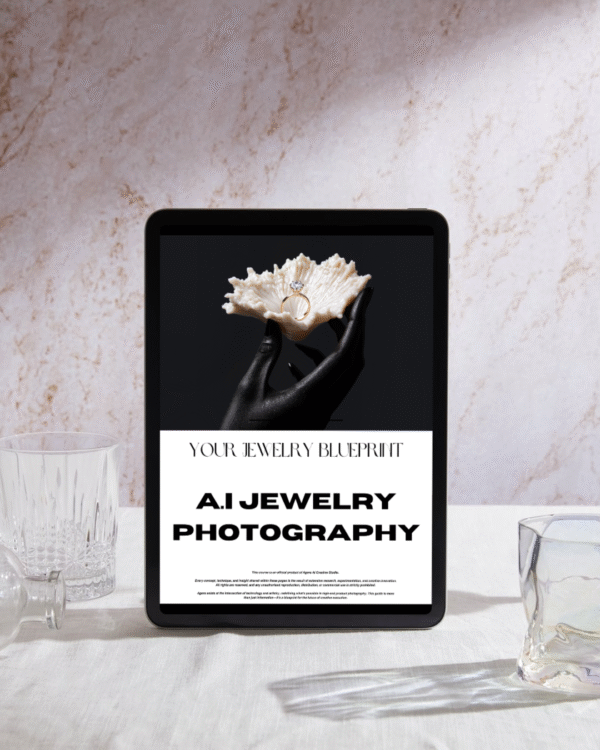


Master AI Jewelry Product Photography Guide
Jewelry photography is one of the most demanding yet rewarding niches in product imagery. Each piece—whether it’s a sparkling diamond ring or a minimalist gold pendant—needs to be captured with precision, depth, and emotion. The Master AI Jewelry Product Photography Guide helps creators, brands, and online sellers harness artificial intelligence to elevate every photo, making jewelry appear irresistible and luxurious.
In this comprehensive guide, you’ll learn how AI is transforming jewelry photography, how to set up your environment, select the right lighting, and use advanced AI-driven editing techniques to make your visuals shine brighter than ever before.
1. The Evolution of Jewelry Photography
Jewelry photography has come a long way from handheld cameras and basic studio setups. Today, AI technology enables creators to shoot, edit, and enhance photos with unprecedented accuracy. Traditional methods relied heavily on manual adjustments—perfecting lighting angles, reducing reflections, and balancing exposure.
Now, AI algorithms can automatically detect the reflective surfaces of metals and gemstones, adjust shadows, and even remove blemishes or dust spots. With the right approach, AI can mimic high-end studio lighting, making even small-scale sellers compete with luxury brands in visual quality.
2. Why AI Matters in Jewelry Photography
The brilliance of a diamond or the luster of gold depends heavily on how light interacts with its surface. Capturing this dynamic accurately requires expertise, patience, and expensive equipment. AI tools now simplify these complex tasks by:
Analyzing reflection and refraction: AI identifies light behavior on reflective surfaces, optimizing exposure in real-time.
Enhancing color depth: Subtle hues in gemstones are enhanced without oversaturation.
Background automation: AI can remove, blur, or replace backgrounds seamlessly for e-commerce-ready photos.
Texture refinement: Every metal engraving or gemstone facet is detailed precisely to highlight craftsmanship.
For small business owners and content creators, AI levels the playing field by providing studio-grade results without needing extensive photography skills or high-end gear.
3. Setting Up Your AI-Ready Photography Environment
Even though AI helps with editing and enhancements, your shooting setup still matters. Begin with a clean, neutral background—white or light gray works best for jewelry as it enhances reflections and shadows naturally. Use diffused lighting to avoid harsh glare.
A simple setup might include:
A lightbox or softbox
Two LED panel lights on each side
A macro lens for fine detailing
A tripod for stability
Once your photos are captured, AI tools like Runway ML, Luminar Neo, or Adobe Firefly can assist in post-processing—enhancing clarity, removing dust, and even generating additional creative angles or compositions automatically.
4. Shooting Techniques for Stunning Results
Jewelry photography isn’t about simply clicking a picture—it’s about storytelling. The product must reflect craftsmanship and desirability. Here are proven techniques:
a. Focus on Depth of Field
Use a narrow aperture (f/11 or higher) to ensure clarity across the jewelry. AI-powered focus stacking can merge multiple images to keep every facet sharp.
b. Manage Reflections
Reflective metals often create unwanted glare. Use a light diffuser or white foam board to control bounce light. Later, AI retouching can refine reflections without dulling the shine.
c. Use Props Creatively
Minimal props, such as velvet pads, marble surfaces, or dried flowers, can add luxury context. AI-based composition tools can help position props harmoniously.
d. Capture Multiple Angles
AI-driven rotation features can generate 360-degree views from limited photos, giving online shoppers a realistic experience of the jewelry’s form.
5. AI Editing Workflow for Jewelry Photography
Once the shoot is complete, AI-powered editing is where the transformation truly happens. Below is a structured workflow to follow:
Import and Organize: Upload images to AI photo software. Tools like Lightroom or Skylum categorize shots automatically.
Background Enhancement: Use AI masking to isolate jewelry and remove unwanted background elements.
Lighting Correction: Automated highlight and shadow balancing ensures gemstone sparkle looks natural.
Dust and Imperfection Removal: AI retouching eliminates micro-dust particles invisible to the naked eye.
Color Accuracy: Gemstones’ colors should look real; AI auto-corrects color balance based on known gemstone profiles.
Sharpening and Clarity: Fine-tune edges and details without introducing noise.
AI Upscaling: Use AI to enhance image resolution for large displays or e-commerce platforms without losing quality.
This workflow reduces editing time dramatically while maintaining professional output.
6. The Role of AI Generative Tools
Generative AI has revolutionized creative visualization. With prompt-based systems, you can simulate jewelry worn by models, design matching backgrounds, or create product lifestyle shots. For instance, you can generate an elegant wrist or neckline to display jewelry without hiring models.
Additionally, tools like Midjourney or Firefly can render jewelry in realistic lighting conditions—studio, daylight, or luxury environments. This flexibility helps brands produce endless content variations for marketing, social media, and online stores.
7. Common Mistakes to Avoid
While AI simplifies jewelry photography, misuse can lead to unrealistic results. Avoid:
Over-editing: Too much glow or contrast can make jewelry look fake.
Color distortion: Gemstones should reflect their true tone.
Background inconsistency: Keep a uniform background for brand cohesiveness.
Ignoring reflections: Realistic reflections add authenticity—don’t erase them completely.
AI is a tool for enhancement, not a replacement for genuine craftsmanship. Always maintain authenticity.
8. Optimizing AI-Edited Photos for Online Platforms
Once your photos are ready, optimization ensures they perform well online.
Resize correctly: For e-commerce, keep image widths between 1200–2000 px for clarity.
Use WebP or AVIF formats: These formats retain quality while reducing load time.
Add metadata: Include jewelry type, material, gemstone, and brand name for SEO benefits.
Consistency: Maintain uniform lighting and angles across all product images to strengthen visual branding.
AI can even automate tagging and description generation for hundreds of product listings.
9. Future of AI in Jewelry Photography
The future is even more exciting. Emerging AI models can simulate physical lighting behavior and predict how jewelry will look under various light sources. Soon, virtual try-on technologies will allow customers to see jewelry on themselves in real-time using AI and AR (Augmented Reality).
Furthermore, AI will analyze customer engagement data to suggest the most appealing photo styles for specific demographics. This means not only will your photos look perfect, but they’ll also be data-optimized for conversions.
10. Final Thoughts
Mastering jewelry photography with AI isn’t just about making images beautiful—it’s about telling a visual story of luxury, precision, and emotion. The Master AI Jewelry Product Photography Guide empowers photographers, online sellers, and designers to elevate their work without needing expensive studios or years of experience.
By blending traditional artistry with AI innovation, every photo can capture the sparkle that customers can almost feel through the screen. Whether you’re photographing handcrafted silver jewelry or high-end diamonds, AI tools are your creative partners in achieving perfection.